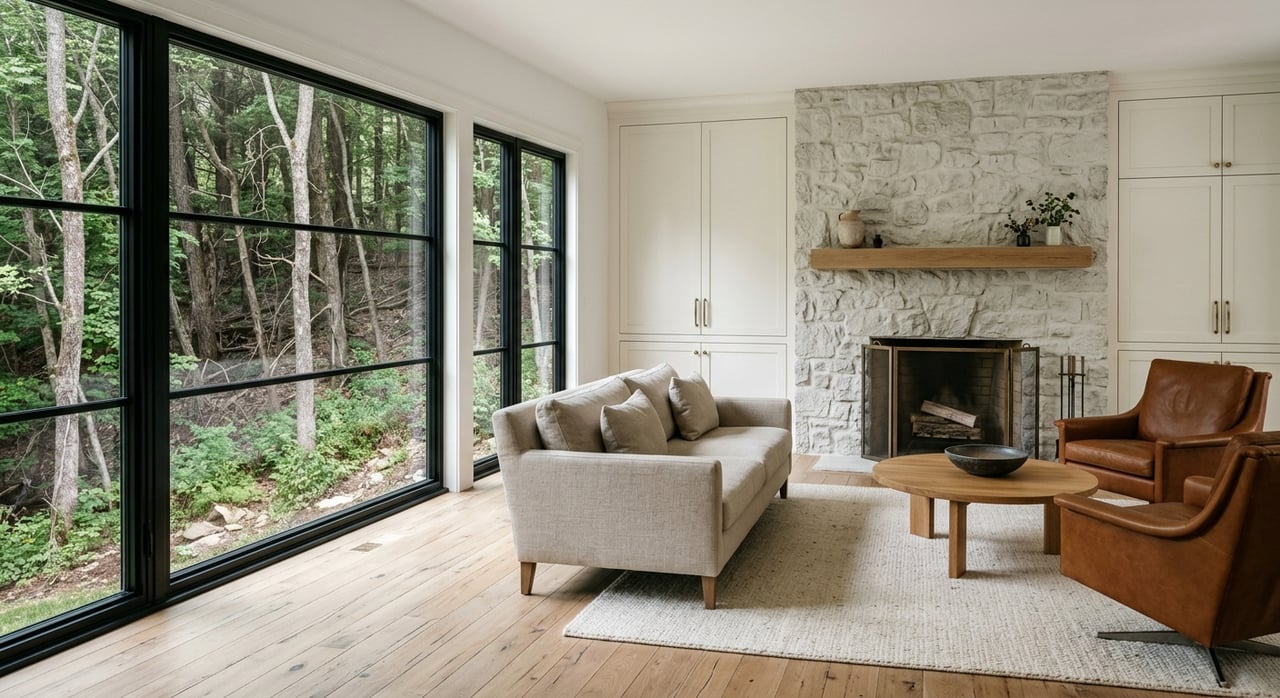
Relocating To Asheville: A Mountain Buyer Guide
April 23, 2026
April 23, 2026
Thinking about moving to Asheville? You are not alone, and you are probably asking the same questions most relocation buyers do: Where should I focus, how competitive is the market, and what do I need to watch for in a mountain home? The good news is that Asheville gives you more room to think and plan than it did during the peak frenzy years. This guide will help you understand the market, compare key areas, budget more accurately, and handle mountain-specific due diligence with confidence. Let’s dive in.
If you are relocating to Asheville, the first thing to know is that the market has shifted into a more balanced phase. The January 2026 Asheville MSA report shows 2,253 homes for sale, 4.1 months of supply, 85 days on market, and a median sales price of $437,000.
Other data points tell a similar story, even though they track different geographies. Redfin’s Asheville market page shows a median sale price of $500,000, homes taking about 126 to 128 days to sell, and multiple offers being rare. In practical terms, that means you should expect selective competition instead of assuming every home will trigger a bidding war.
That extra breathing room matters if you are buying from out of state. You may have more time for inspections, pricing conversations, and a wider search across Asheville and nearby communities.
One of the biggest relocation mistakes is treating Asheville like one uniform market. It is not. Taxes, commute patterns, and school assignments can all change depending on the exact address.
According to Buncombe County, consolidated tax bills depend on where the property is located. That means two homes with similar prices can carry different annual costs.
For many buyers, it helps to compare Asheville proper with nearby areas like Black Mountain, Swannanoa, Weaverville, Woodfin, Arden, Candler, Fairview, and Biltmore Forest. These places often come up in relocation searches because they can offer different lot types, commute patterns, and tax setups.
If you want to be closest to downtown amenities, restaurants, and city services, Asheville proper will likely stay high on your list. You may also want to look closely at city taxes and any applicable school levy when comparing monthly carrying costs.
Black Mountain and Swannanoa often appeal to buyers who want quick access east of Asheville while staying connected to mountain surroundings. Travel times can vary, and these areas were also among those highlighted for heavy impacts after Helene-related landslides, so property-specific due diligence matters.
North of Asheville, Weaverville and Woodfin are common comparison points for buyers who want access to Asheville while exploring different neighborhood layouts and commute options. A small map shift can change school assignment, taxes, and the feel of your daily drive.
These areas are often part of relocation conversations because they give you different directions and approaches into Asheville. If airport access matters, Arden may be a natural place to include in your search radius since Asheville Regional Airport is south of downtown.
Asheville is connected, but it still functions like a mountain market. According to Explore Asheville’s travel guide, Asheville is served by I-26, I-40, and I-240, and Asheville Regional Airport is about 20 minutes south of downtown.
The airport reported 2.24 million passengers in 2025 and offers nonstop service to 26 destinations on five airlines. ART transit also serves the city and Black Mountain, including a route to the airport. That is helpful if you are planning scouting trips or want a backup to driving.
At the same time, mountain travel times are not always as simple as the mileage suggests. Explore Asheville notes that after Helene, most roads have reopened, but route changes and alternate routes can still add 15 to 30 minutes, so checking current road conditions before a showing trip is smart.
If schools are part of your relocation planning, verify them by address before you write an offer. Buncombe County Schools and district boundaries are not something you should estimate based on a community name alone.
The county school system includes 45 schools across six districts: Enka, Erwin, North Buncombe, Owen, Reynolds, and Roberson. The Buncombe County Schools directory specifically notes that families can look up a school by address, which makes address-level confirmation an important part of due diligence.
When you relocate to Asheville, purchase price is only part of the budget. Property taxes can vary materially by location because your bill may include county taxes, city taxes, school taxes, and special district levies.
The City of Asheville budget page lists a 2025-2026 city tax rate of 44.19 cents per $100 of assessed value. Buncombe County’s FY2026 adopted county tax rate is 54.66 cents per $100 of property value, and the county notes that taxpayers receive a consolidated bill that may include county and any applicable city, school, and district taxes.
That means tax estimates should be tied to the exact parcel, not a neighborhood average. Buncombe County also reappraises property on a four-year cycle, and the 2025 reappraisal became effective January 1, 2025, which can affect how buyers think about assessed value and future carrying costs.
Relocation buyers often worry they need to waive every protection to win. In Asheville’s current market, that is usually not the starting point.
Redfin’s market data classifies Asheville as not very competitive and reports that homes sell for about 4% below list price on average. That does not mean every seller will negotiate heavily, but it does support a more measured approach with inspection and financing contingencies used thoughtfully.
A strong offer still matters, especially for well-priced homes or properties with unique features. But for many buyers, the right strategy is less about speed at all costs and more about balancing price, terms, condition, and risk.
Buying in Western North Carolina means you need to look beyond finishes and floor plans. Mountain properties can have risk factors that do not show up in flatter markets.
If a home is near a creek, in a low-lying area, or on a heavily graded lot, flood review should happen early. Buncombe County’s floodplain resources provide GIS floodplain mapping and direct buyers to address-level flood risk information through FloodSmart.
Flood risk can affect insurance, financing, and long-term ownership costs. It is much better to understand that upfront than to discover it late in the transaction.
Steep slopes are part of the region’s appeal, but they also require more care. The North Carolina Department of Environmental Quality says landslides are most common in the mountain region and that wet weather can trigger them.
After Tropical Storm Helene, USGS identified 1,973 landslides, with heavy impacts in Swannanoa, Black Mountain, and hilly areas north and east of Asheville. If you are considering a hillside, wooded, or acreage property, pay close attention to drainage, slope, retaining features, access roads, and storm history.
Asheville and Buncombe County are still in a recovery period after Helene. The City of Asheville’s 2026 recovery update makes it clear that rebuilding and recovery work continue.
Before you lock in travel plans or contract timelines, confirm neighborhood access, utility status, and whether nearby rebuilding activity could affect your move-in plans. This is especially important if you are buying from a distance and relying on a short in-person visit.
If you are relocating part-time, buying a future retirement home, or considering an investment angle, make sure you understand local tax implications. Buncombe County levies a 6% occupancy tax on applicable short-term rentals, and rentals in Asheville, Black Mountain, or Woodfin may also face an additional 1.5% gross receipts tax.
That does not mean these properties cannot work for your goals. It just means your numbers should reflect the exact use case and location before you move forward.
Here is a simple way to stay grounded as you narrow your options:
Relocating to Asheville can be exciting, but it is easier when your search matches how the region actually works. If you want clear guidance on Asheville, Black Mountain, Weaverville, Candler, Fairview, or other nearby mountain communities, connect with Aaron Chapman for responsive, practical help as you plan your move.
Stay up to date on the latest real estate trends.
We'd love to hear from you! Whether you're buying, selling, or just exploring your options, we're here to provide answers, insights, and the support you need. Contact us and start planning your next move.